Skip to content
Jeroen&Evita
Punakaiki
← Terug naar reisoverzicht← Back to trip overview Nieuw-ZeelandNew Zealand · 2014

PunakaikiPunakaiki

SoundtrackSoundtrack · Nieuw-ZeelandNieuw-Zeeland
Adventure of a Lifetime door Coldplay by Coldplay
0:00—:—

Deze dag stond vooral in het teken van reizen. Met de prachtige dag in Abel Tasman National Park achter ons dalen we verder af op het Zuider Eiland. De afstand die we moesten afleggen was weliswaar niet enorm, maar de wegen worden steeds kronkeliger en de hoogteverschillen steeds groter.

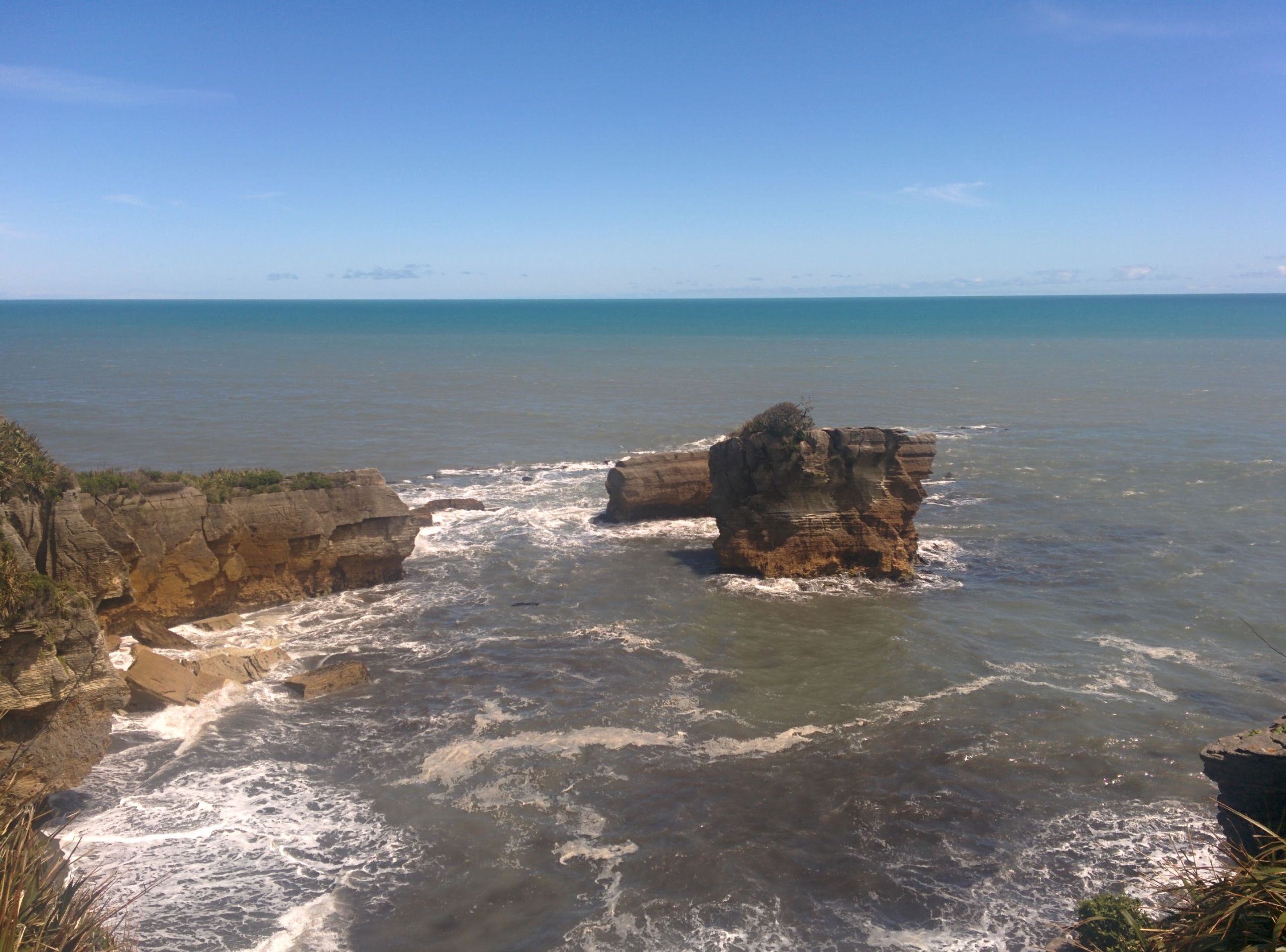
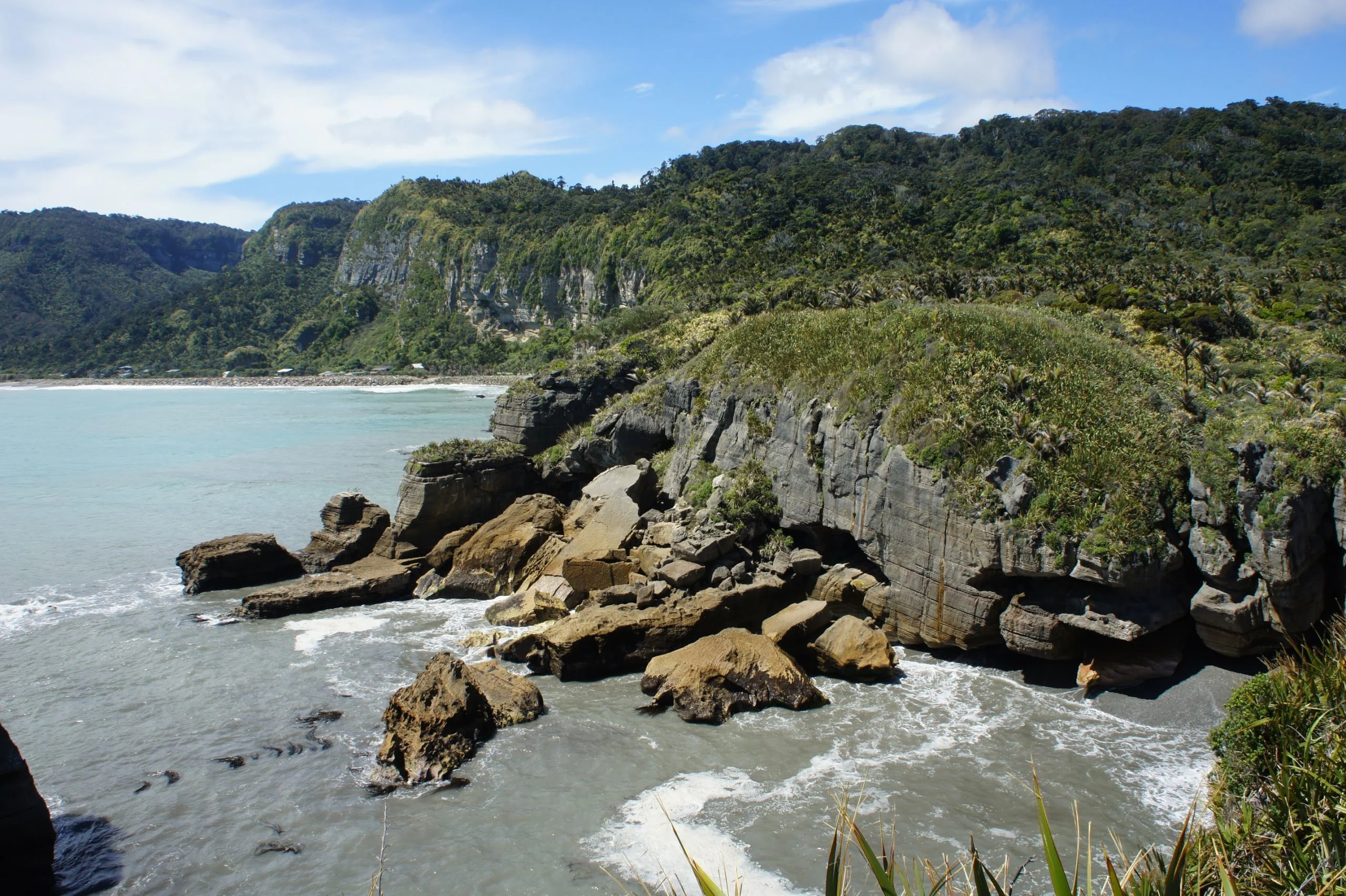
Onderweg zouden we wel een stop gaan maken in Punakaiki. De weg ernaartoe vloeit langs een prachtige kustlijn vol rotspartijen aan en in het water dat er woest tegenaan botst.

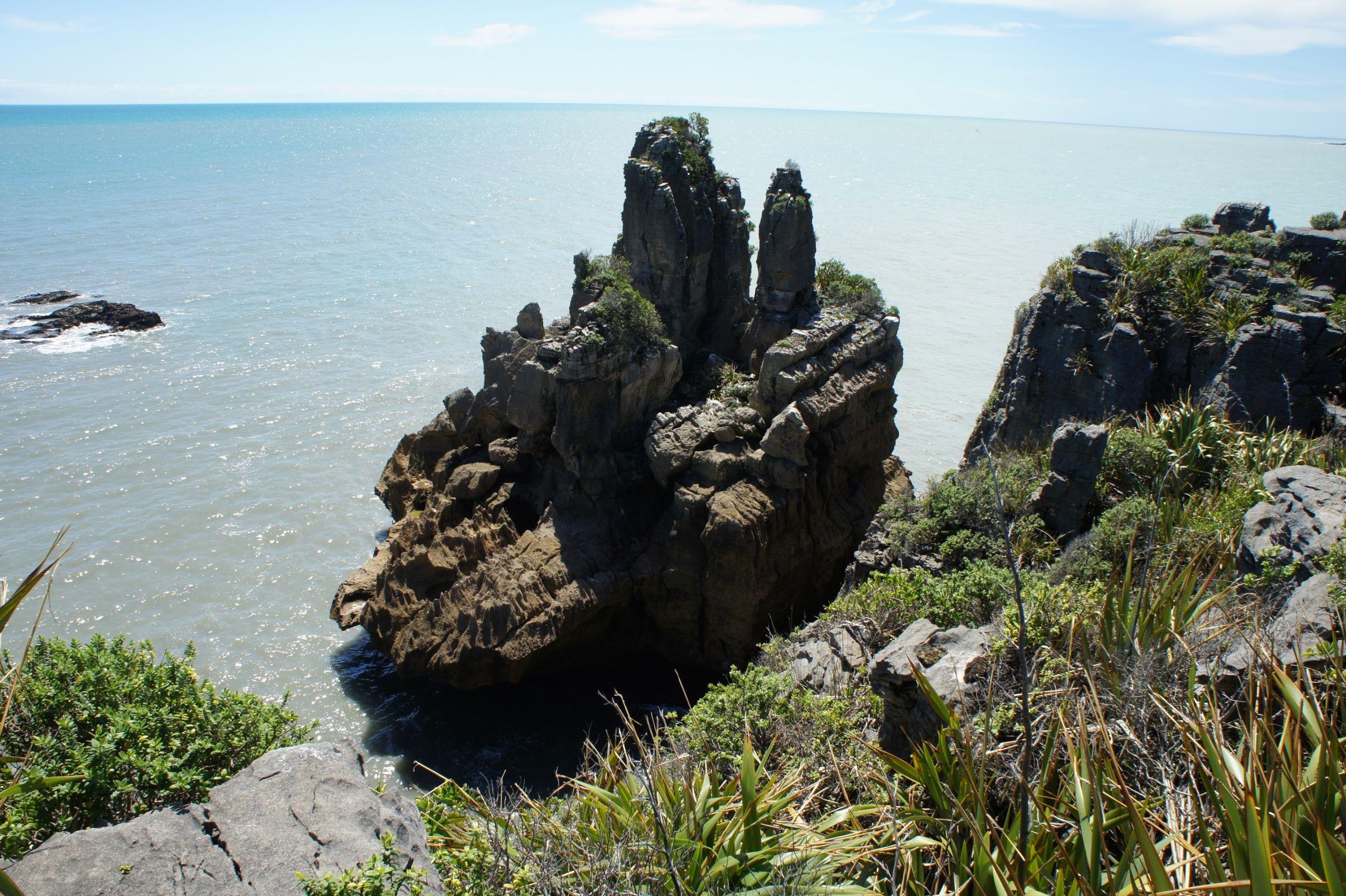
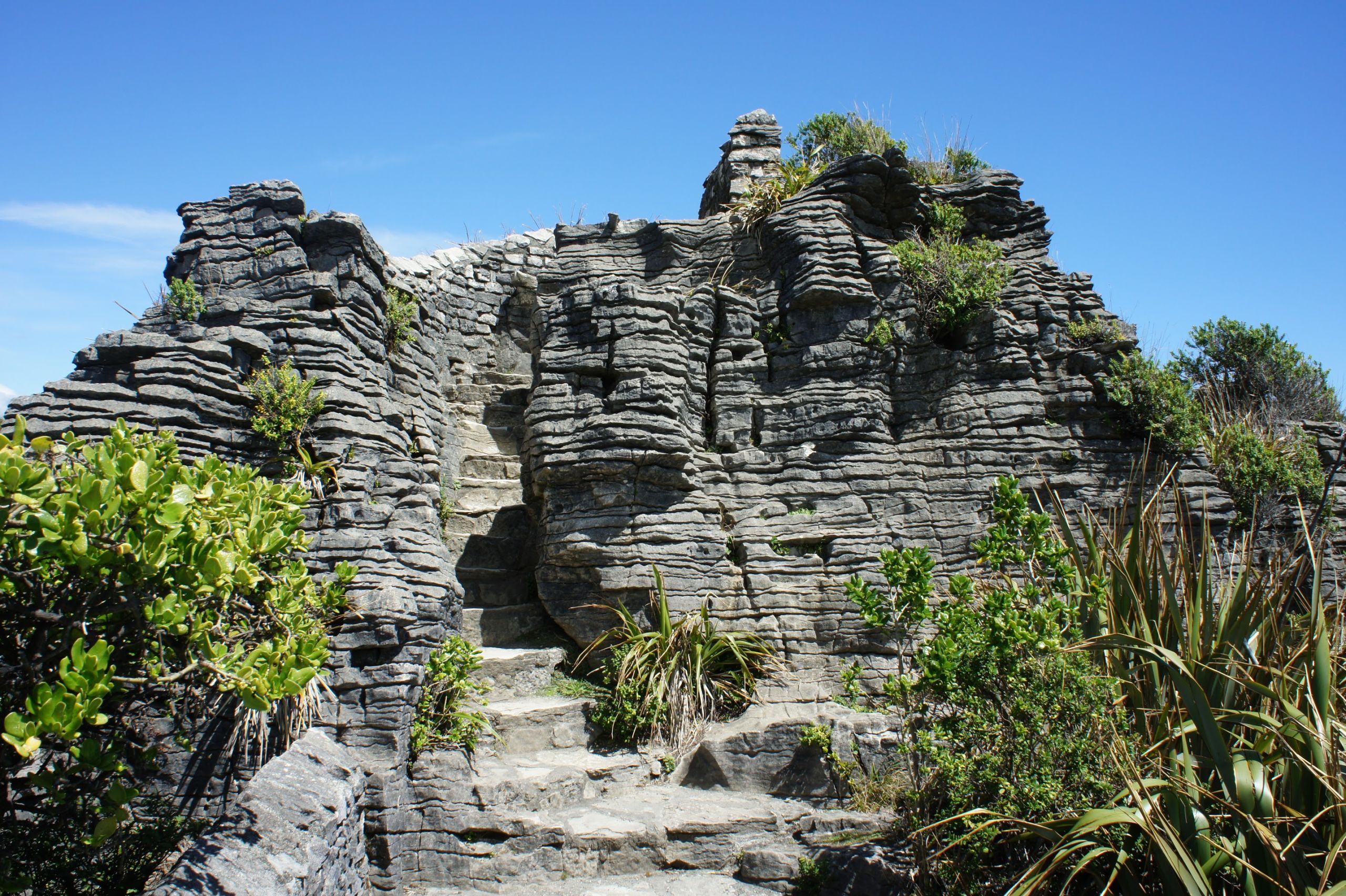
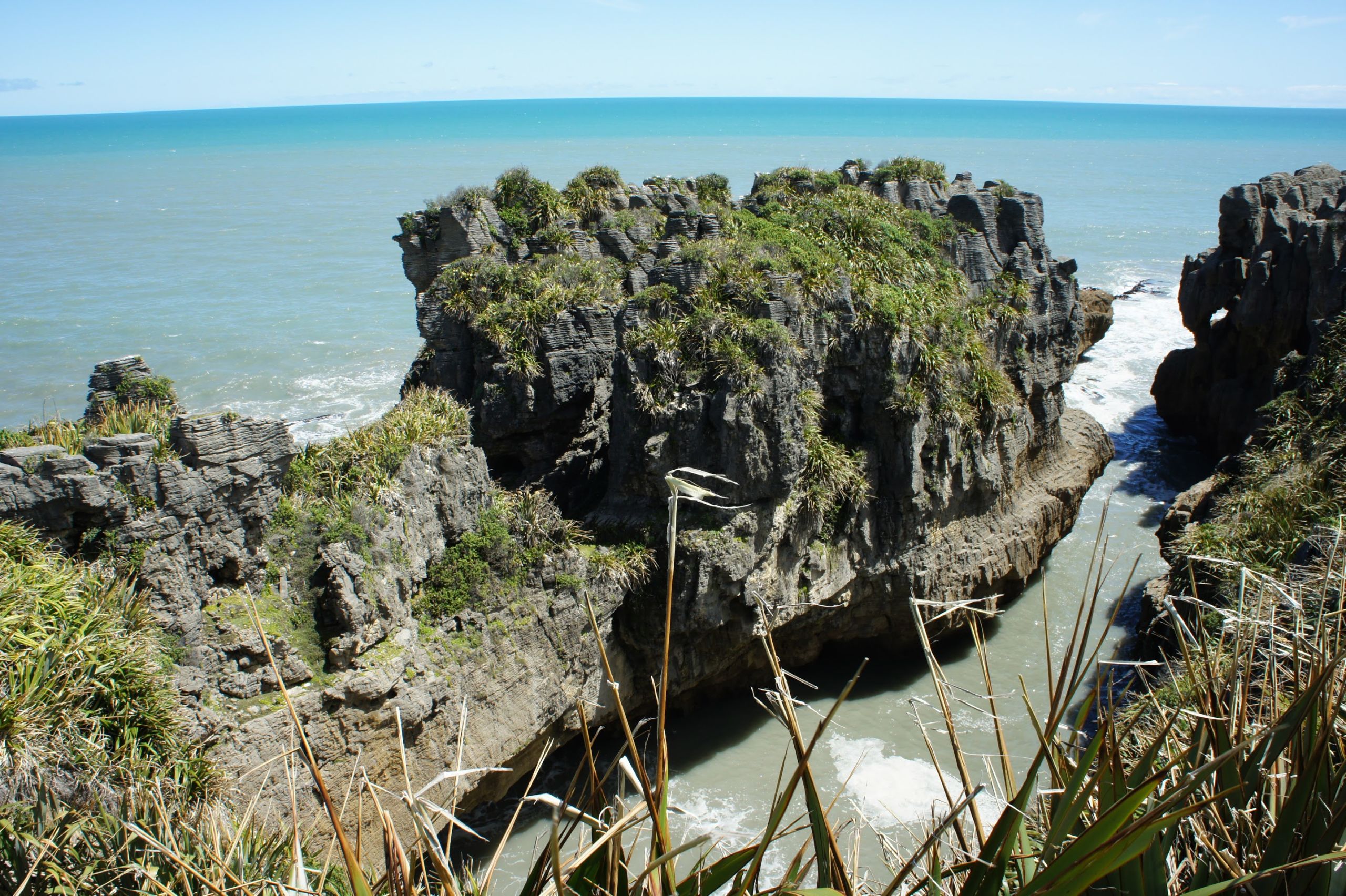
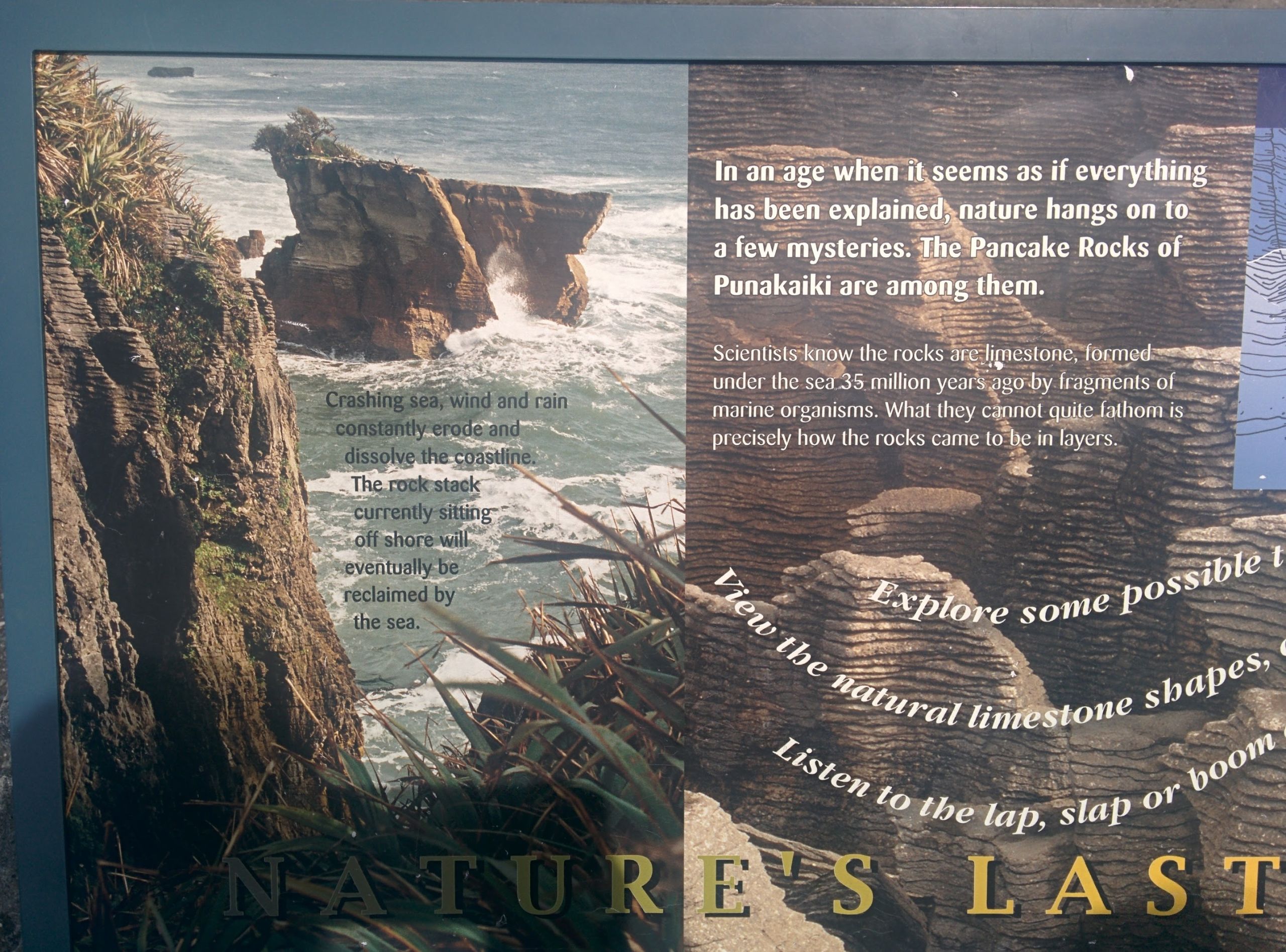
Het stadje is bekend om de zogeheten Pancake Rocks. Dit is een groep hevig verweerde kalksteenrotsen.

Bij hoge vloed blaast de Tasmaanse zee water door de zogeheten blowholes. De structuur van de rotsen lijkt op een stapel pannenkoeken, gevormd door het op elkaar drukken van wisselend zachte en harde lagen grond.
Hierna zijn we met een paar pauzes verder naar het zuiden gereden, richting het serieuzere gebergte van het land. Het landschap verschilt best sterk met het noorder eiland. Het zuider eiland doet “herfstachtiger” aan qua kleuren en de grond lijkt ruwer, meer rotsachtig. De gemiddelde temperatuur op het zuider eiland ligt ook lager, al hebben we in Abel Tasman Park tot nu toe onze mooiste dag gehad wat weersomstandigheden betreft.

Onze weg leidt over vele smalle bergpaden. Eigenlijk zijn de meeste wegen in Nieuw Zeeland buiten de grote steden simpele tweebaanswegen. En bruggen, die zijn meestal eenbaans. Dus, goed kijken of er aan de andere kant van de brug ook een auto de brug op wil en wie er voorang heeft. Het verkeer is wat ons betreft overigens soms pure waanzin. De maximum snelheid in dit land is 100 km/u. Langzaam zou je zeggen, maar dit is geregeld ook de adviessnelheid op smalle wegen door de bergen vol niveauverschillen, blinde bochten en slecht wegdek. En dan moet je je weghelft ook nog delen met fietsers en wandelaars. En ja, die kom je ook op deze wegen tegen. En vangrails zijn ook een vrij zeldzaam goed op deze wegen.
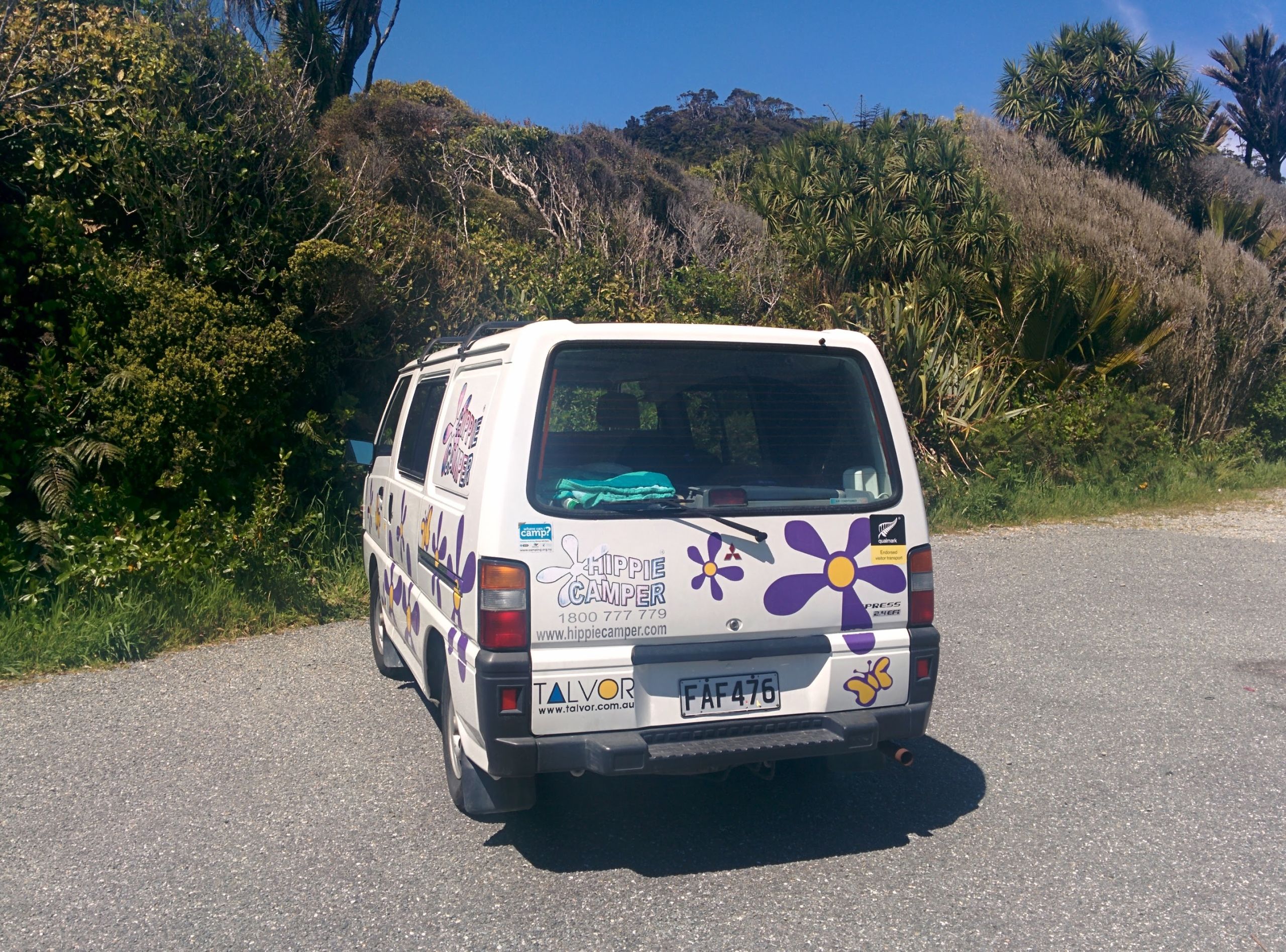
Natuurlijk, als je hier woont zal het vast minder intimiderend zijn, maar voor mensen uit een vlak kikkerlandje is het soms best spannend. En niet alle Nieuw Zeelanders hebben hier begrip voor. Als je ergens 80 rijdt in plaats van 100 worden ze daar regelmatig gefrustreerd over. Getoeter en vuisten omhoog wanneer ze een punt hebben gevonden om je in te halen hebben we dan ook meer dan eens meegemaakt. Het is een van de weinige negatieve punten die we kunnen bedenken over het land en de inwoners.

This day was all about travel. With the beautiful day in Abel Tasman National Park behind us, we descend further onto the South Island. The distance we had to cover wasn't enormous, but the roads became increasingly winding and the elevation changes increasingly dramatic.

Along the way, we would make a stop in Punakaiki. The road there winds along a stunning coastline full of rock formations that the sea crashes wildly against.

The town is famous for the so-called Pancake Rocks. This is a group of heavily eroded limestone rocks.

At high tide, the Tasmanian sea blasts water through the so-called blowholes. The structure of the rocks resembles a stack of pancakes, formed by the compression of alternating soft and hard layers of earth.

After this, we continued south with a few breaks, heading toward the more serious mountain ranges of the country. The landscape differs quite noticeably from the North Island. The South Island feels more "autumnal" in terms of colors, and the ground seems rougher, more rocky. The average temperature on the South Island is also lower, though we've had our most beautiful day weather-wise so far in Abel Tasman Park.

Our route takes us over many narrow mountain passes. Actually, most roads in New Zealand outside the major cities are simple two-lane highways. And bridges—those are usually single-lane. So you have to look carefully to see if a car on the other side of the bridge also wants to cross, and who has the right of way. The traffic is, in our opinion, sometimes pure madness. The maximum speed limit in this country is 100 km/h. You'd say that's slow, but it's often also the recommended speed on narrow mountain roads full of elevation changes, blind corners, and poor road surface. And you also have to share your lane with cyclists and pedestrians. And yes, you do encounter them on these roads. And guardrails are also a fairly rare commodity on these roads.

Of course, if you live here, it's probably less intimidating, but for people from a flat country like ours, it can be quite thrilling. And not all New Zealanders understand this. If you drive 80 instead of 100 somewhere, they often get frustrated about it. Honking and raised fists when they find an opportunity to pass you—we've experienced that more than once. It's one of the few negative points we can think of about the country and its inhabitants.

OnderwerpenThemes